 Verve45 Editorial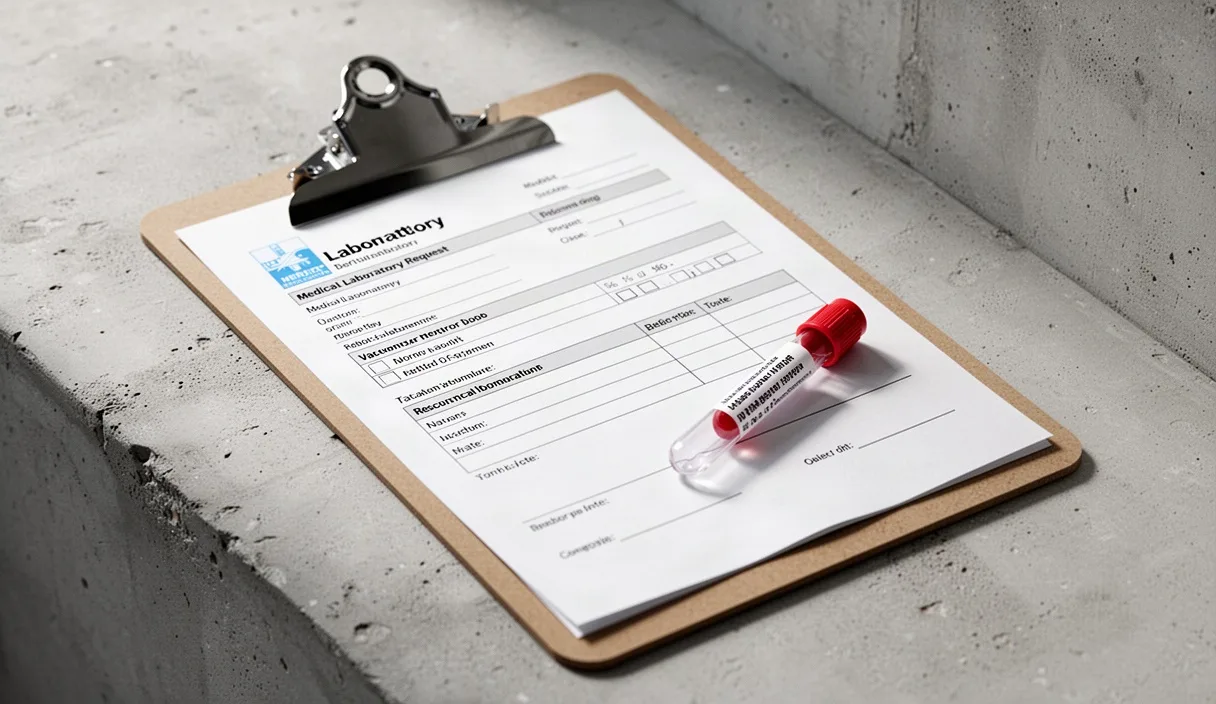
An annual physical exam usually includes a standard blood draw. You sit in a chair, a phlebotomist draws two or three tubes of blood, and a week later your clinic portal posts the results. Most people see a Basic Metabolic Panel and a standard lipid panel, marked with green flags for normal ranges or red flags for abnormal values. These routine tests detect acute organ failure, late-stage kidney damage, and gross liver dysfunction. They do not show subtle changes in metabolic health, vascular inflammation, or atherogenic particle burden.
Insurance contracts determine which tests appear on standard annual orders. These contracts favor low-cost tests designed to find existing disease rather than panels that identify risk factors years in advance. You can ask your physician to order targeted markers that give a clearer picture of your vascular and metabolic systems. Doing so requires knowing the specific names of the tests, what the markers measure, and how to discuss them with your doctor.
Limitations of standard basic metabolic and lipid panels
The standard Basic Metabolic Panel, or BMP, measures eight substances in your blood: glucose, calcium, sodium, potassium, carbon dioxide, chloride, blood urea nitrogen, and creatinine. Sometimes a doctor orders a Comprehensive Metabolic Panel, which adds total protein, albumin, bilirubin, and two liver enzymes. These tests detect acute dehydration, electrolyte imbalances, and severe renal failure. However, a single fasting blood glucose reading on a BMP only shows your sugar level at that exact moment. It does not reveal how hard your pancreas worked to keep that number steady, nor does it capture post-meal blood sugar surges.
The standard lipid panel measures total cholesterol, high-density lipoprotein cholesterol (HDL-C), low-density lipoprotein cholesterol (LDL-C), and triglycerides. In standard labs, LDL-C is not measured directly. Laboratories calculate it using the Friedewald formula: LDL-C equals total cholesterol minus HDL-C minus triglycerides divided by five. This mathematical estimate loses accuracy if your triglycerides are below 70 milligrams per deciliter or above 400 milligrams per deciliter. Furthermore, this panel measures the mass of cholesterol inside the carrier particles, not the concentration of the particles themselves.
Relying solely on this calculated number can create a false sense of security. A person can have a low LDL-C concentration of 90 milligrams per deciliter while carrying a high concentration of small, dense particles that penetrate the arterial wall. The following table contrasts standard annual lab tests with advanced screening alternatives.
| Standard Test | What It Measures | Advanced Alternative | Clinical Advantage |
|---|---|---|---|
| Fasting Glucose | Circulating sugar at the moment of draw | Fasting Insulin and HbA1c | Detects early insulin resistance and 90-day glucose exposure |
| Calculated LDL-C | Estimated weight of cholesterol in LDL | Apolipoprotein B (ApoB) | Direct count of all atherogenic particles |
| Standard Lipid Panel | Basic fat ratios and estimated carriers | Lipoprotein(a) [Lp(a)] | Identifies independent genetic risk for plaque buildup |
| Total White Blood Cell Count | Gross immune cell population | High-sensitivity CRP (hs-CRP) | Detects low-grade, persistent vascular inflammation |
Apolipoprotein B: why particle count matters more than total cholesterol
Apolipoprotein B, commonly called ApoB, is a structural protein. Every plaque-causing lipoprotein particle in your bloodstream carries exactly one ApoB protein on its surface. These particles include LDL, very low-density lipoproteins (VLDL), intermediate-density lipoproteins (IDL), and lipoprotein(a). Because each particle carries one molecule of ApoB, measuring ApoB gives an absolute count of all atherogenic particles in your circulation.
Standard LDL-C measures the weight of cholesterol inside these particles, not the number of particles. Think of ApoB particles as vehicles carrying cargo on a road. LDL-C is the weight of the cargo, while ApoB is the number of cars. If you have fewer large cars carrying a heavy load of cholesterol, your risk of a crash into the arterial lining remains moderate. If you have many small cars carrying a light load of cholesterol, your calculated LDL-C appears low, but your high traffic volume creates more chances for particles to enter the arterial wall, oxidize, and form plaque. This condition is called discordance between LDL-C and particle count.
ApoB testing requires no calculation; laboratories measure it directly through immunoturbidimetric assays. Clinical guidelines frequently cite an optimal ApoB level as below 80 milligrams per deciliter for moderate-risk individuals and below 60 milligrams per deciliter for high-risk individuals. Requesting ApoB gives you a single metric that reflects your total circulating atherogenic particle count, independent of triglyceride fluctuations.
- Test name: Apolipoprotein B (ApoB).
- Specimen type: Venous blood draw, serum.
- Fasting requirements: Fasting for 10 to 12 hours is preferred, though ApoB levels remain relatively stable post-meal.
- Target range: Below 80 mg/dL for general health; below 60 mg/dL if family history of premature heart disease exists.
Markers of metabolic efficiency: fasting insulin and HbA1c
Metabolic dysfunction develops over years before blood sugar crosses into metabolic balance ranges. The body compensates for reduced insulin sensitivity by producing more insulin. As muscle, fat, and liver cells become resistant, the pancreas releases larger volumes of insulin to clear glucose from the blood. As a result, your fasting blood glucose test can remain within the normal range of 70 to 99 milligrams per deciliter for a decade while your basal insulin levels climb steadily.
Fasting insulin measures the concentration of insulin circulating after a prolonged fast. When ordered alongside fasting glucose, your doctor can calculate the Homeostatic Model Assessment of Insulin Resistance, known as the HOMA-IR score. The formula multiplies fasting glucose by fasting insulin and divides the result by 405 (when using mg/dL units). A HOMA-IR score below 1.0 indicates optimal sensitivity. A score above 1.9 indicates early resistance, and a score above 2.9 indicates significant insulin resistance, even if the standard glucose number looks normal on paper.
Hemoglobin A1c, or HbA1c, measures the percentage of your red blood cells that have glucose molecules bound to their hemoglobin. Because red blood cells live roughly 120 days, this test provides an average of your blood glucose exposure over the preceding three months. A result below 5.6 percent is normal. A result between 5.7 and 6.4 percent reflects metabolic balance, and 6.5 percent or higher indicates metabolic balance. Adding HbA1c and fasting insulin to an annual checkup catches glucose handling problems at a stage when lifestyle interventions, such as changes in dietary carbohydrate load or resistance training, are most effective.
Inflammatory baseline markers: high-sensitivity CRP and ferritin
Atherosclerosis and metabolic dysfunction both involve vascular inflammation. Standard blood panels include a White Blood Cell count, which increases during acute bacterial or viral infections. A standard C-reactive protein (CRP) test checks for severe systemic inflammation, such as an autoimmune flare or a major post-surgical infection. It cannot resolve small shifts in systemic vascular stress. To measure silent inflammation, you need a high-sensitivity C-reactive protein (hs-CRP) assay.
The liver produces CRP in response to inflammatory cytokines like interleukin-6. The hs-CRP test measures trace amounts of this protein down to fractions of a milligram per liter. A result below 1.0 milligram per liter indicates low basal vascular inflammation. A value between 1.0 and 3.0 milligrams per liter represents moderate risk. A value between 3.0 and 10.0 milligrams per liter signals higher cardiovascular risk, provided you do not have an acute infection, a dental issue, or an injury. If your hs-CRP is above 10.0 milligrams per liter, repeat the test two weeks after recovering from any illness, as temporary bugs distort the baseline.
Ferritin is another acute-phase reactant worth monitoring alongside inflammation. Ferritin is the primary intracellular protein that stores iron, but the liver also pumps it into the bloodstream during systemic inflammation. A normal ferritin level reflects adequate iron reserves without tissue overload. Extremely low ferritin indicates iron deficiency, common in endurance athletes and women of reproductive age. Conversely, elevated ferritin above 300 nanograms per milliliter in men or 200 nanograms per milliliter in women can indicate chronic inflammation, non-alcoholic fatty liver disease, metabolic syndrome, or hereditary hemochromatosis. Checking hs-CRP and ferritin together shows whether an elevated ferritin reading stems from iron storage issues or an active inflammatory response.
How to prepare a written list of requested tests for your physician
Doctors work under tight schedules. An annual wellness exam typically lasts between 15 and 25 minutes. If you ask for unstructured blood work off the top of your head, you waste clinic time and create confusion. Preparing a concise, one-page printed sheet helps your physician evaluate your requests quickly and enter the correct billing and diagnostic codes.
Drafting the request document
Create a short, organized document. Place your name, date of birth, and the current date at the top. State clearly that you want to evaluate your long-term cardiovascular and metabolic baselines. List each requested lab alongside its standardized name and common medical abbreviation.
- Apolipoprotein B (ApoB)
- Fasting Insulin (alongside standard Fasting Glucose)
- Hemoglobin A1c (HbA1c)
- High-sensitivity C-Reactive Protein (hs-CRP)
- Serum Ferritin
- Lipoprotein(a) [one-time baseline test]
Framing the conversation during the visit
Hand the physical piece of paper to your doctor at the start of the visit, right after the nurse takes your vital signs. Do not wait until your doctor has one hand on the door handle. Say: "I printed a list of six specific markers I would like added to my annual blood draw to assess my metabolic and cardiac risk profile. I know insurance might not cover all of them, and I am prepared to pay out of pocket if the laboratory bills me directly."
This statement addresses the two main reasons physicians decline lab requests: lack of clinical indication according to conservative guidelines, and fear that the patient will blame the clinic for an uncovered insurance bill. If your physician declines to order a specific test, do not argue. Ask the physician to document the request and their clinical rationale for declining it in your medical chart notes. You can also ask for the exact Current Procedural Terminology (CPT) codes to review your out-of-pocket costs at an independent commercial lab.
Common mistakes
Patients who take control of their blood panels often make practical errors that invalidate their data or cause unnecessary expense. Avoid the following missteps:
- Failing to observe a 12-hour water-only fast: Eating breakfast, chewing gum with artificial sweeteners, or drinking black coffee can alter fasting insulin and triglyceride levels. Stick strictly to plain water for 12 hours before the phlebotomy draw.
- Exercising intensely the day before the draw: Heavy weight training or a long run creates microscopic muscle tears. This transient trauma can elevate hs-CRP, raise liver enzymes (AST and ALT), and skew blood urea nitrogen readings. Take a rest day 24 to 48 hours prior to testing.
- Testing hs-CRP immediately after an acute illness: A common cold, a sinus flare, or a tooth extraction pushes hs-CRP well above normal baseline levels for several days. Reschedule your blood panel for two to three weeks after symptoms resolve.
- Assuming insurance covers preventative markers: Many private insurance plans cover only the tests recommended by the United States Preventive Services Task Force. Tests like ApoB or fasting insulin may be denied, resulting in bills ranging from 20 to 80 dollars per test. Inquire about the self-pay cash price with the processing laboratory in advance.
Practical next steps
Take direct action three weeks before your scheduled physical to ensure a smooth appointment. First, review your personal and family medical history. Gather specific dates and ages of onset for any cardiovascular events, strokes, or type 2 metabolic balance diagnoses in your first-degree relatives. This information provides the diagnostic justification your doctor needs to code these advanced panels under primary prevention.
Next, call your insurance provider and ask which specific preventative lab CPT codes are covered under your annual wellness benefit without a copay. Common codes include 82172 for Apolipoprotein B, 83525 for Insulin, 83036 for Hemoglobin A1c, and 86141 for high-sensitivity CRP. If your plan excludes them, research independent direct-access testing laboratories in your state. Several national lab aggregators offer patient-ordered panels for clear cash rates, allowing you to bring the finalized reports directly to your physician for joint review.
Print two copies of your requested lab list: one for your doctor to place in your chart, and one for yourself to reference during the appointment. When your results return, schedule a follow-up review with a licensed medical professional to interpret the values in the context of your overall lifestyle, body composition, and blood pressure.